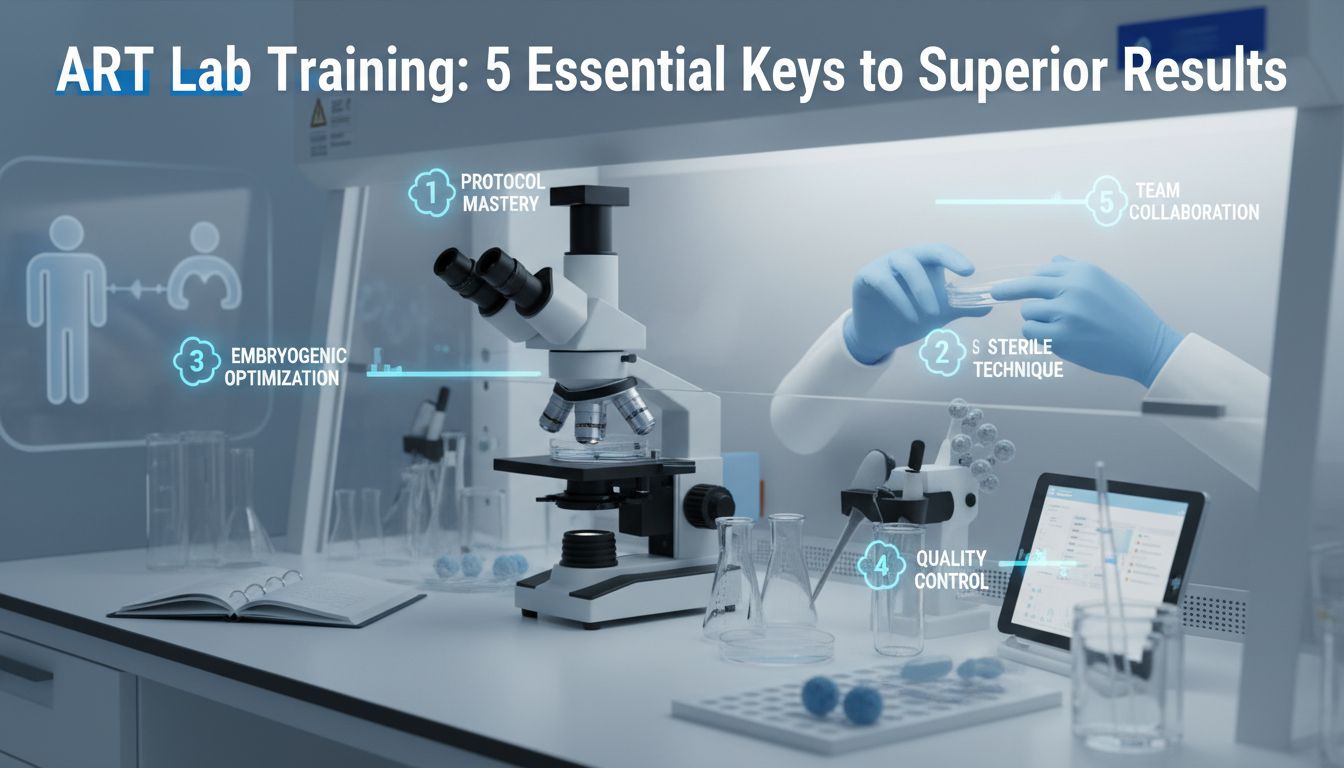
ART Lab Training remains a critical topic for many couples in India. Understanding reproductive health is vital for every couple. This guide on ART Lab Training is specifically tailored for gynecologist who is looking to start iui clinics.
Table of Contents
- The Strategic Foundation: Why Specialized ART Lab Training is the Heart of Your New IUI Clinic
- Mastering Proven Sperm Preparation Protocols: The Ultimate Key to Higher Pregnancy Rates
- Essential Equipment Proficiency: Gaining Total Command Over Your Lab Infrastructure
- The Quality Control Imperative: Implementing Rigorous Standards for Superior Clinical Outcomes
- Troubleshooting Success: How Advanced ART Lab Training Prepares You for Real-World Challenges
The Strategic Foundation: Why Specialized ART Lab Training is the Heart of Your New IUI Clinic
As you embark on the journey of expanding your practice, it becomes evident that the laboratory is the engine room of any fertility service. While high-end centrifuges and incubators are vital, they remain inert tools without skilled hands to operate them. This is where rigorous ART Lab Training becomes the differentiator between a struggling startup and a thriving center of excellence.
Bridging the Gap Between Clinical Vision and Lab Reality
For a gynecologist transitioning to reproductive medicine, understanding the nuances of gamete handling is non-negotiable. Standardized protocols are essential, as outlined in our guide on Success Tips for Converting OPD Clinic into IUI Clinic, emphasizing that staff competence directly correlates with fertilization rates. Investing in structured educational modules ensures your team adheres to global best practices from day one.
Without proper certification, even the most advanced equipment cannot compensate for procedural errors in sperm preparation. ART Lab Training provides your technicians with the critical thinking skills needed to troubleshoot variables like viscosity or debris in samples. This level of proficiency safeguards your patient outcomes and protects your professional reputation.
Case Study 1: Resolving Inconsistency Through Education
Consider the case of “Clinic Alpha,” a newly established facility in a Tier-2 city that initially struggled with a fluctuating IUI success rate of only 8%. Upon clinical audit, it was discovered that the technicians lacked standardized protocols for density gradient preparation, leading to high variability. After the staff completed a comprehensive ART Lab Training program, they standardized their media handling, resulting in a stabilized success rate of 18% within six months.
Regulatory Compliance and Patient Trust
Strict adherence to guidelines provided by authoritative bodies is essential for patient safety and legal compliance. You can review the foundational ethical guidelines and requirements for ART clinics as outlined by the Indian Council of Medical Research (ICMR) to understand the statutory necessity of qualified staff. Patients today are well-informed and actively seek out clinics that display valid certifications and adhere to these national standards.
Furthermore, navigating the legal landscape requires a team that understands documentation and quality control. For a deeper dive into the legalities, we recommend reading our article on ART Clinic Registration Guidelines. Trained staff ensures that your lab logs and quality checks meet the scrutiny of inspection authorities.
Case Study 2: Mitigating Equipment Mishandling
In another instance, “Dr. M’s Clinic” faced repeated complaints regarding post-procedure cramping and consistently low sperm recovery yields. The issue was traced to improper centrifugation speeds and non-calibrated equipment usage by untrained nursing staff. Following targeted certification in Understanding the Role of Sperm Washing Centrifuge in IUI, the clinic eliminated these adverse events and improved their motile sperm recovery metrics significantly.
Investing in Long-Term Success
Ultimately, your reputation rests on the consistent outcomes your laboratory delivers to anxious couples. Prioritizing specialized ART Lab Training is not merely an operational cost but a strategic investment in clinical reliability. Secure your clinic’s future by ensuring your staff is as qualified as the technology they utilize.

Mastering Proven Sperm Preparation Protocols: The Ultimate Key to Higher Pregnancy Rates
The success of any IUI clinic relies heavily on the precision and expertise applied within the laboratory setting. While clinical stimulation protocols are vital, the handling and processing of the male gamete often determine the final viability of the sample. Comprehensive ART Lab Training ensures that your technical team can identify and select the highest quality sperm for insemination.
Advanced preparation techniques, such as density gradient centrifugation, require more than just following a user manual; they demand a nuanced understanding of fluid dynamics and cellular biology. Improper handling during the washing phase can introduce reactive oxygen species (ROS), which severely damage sperm DNA integrity. Therefore, investing in rigorous staff education is non-negotiable for minimizing iatrogenic damage and maximizing fertilization potential.
Adhering to Global Standards
To establish a reputable practice, it is essential to align your laboratory protocols with international benchmarks. The WHO laboratory manual for the examination and processing of human semen serves as the gold standard for global fertility procedures. Your laboratory technicians must be proficient in these specific guidelines to ensure consistency and accuracy across all patient samples.
Standardization prevents “protocol drift,” a common issue where minor deviations in technique accumulate over time, leading to suboptimal outcomes. Regular sperm washing training sessions help staff stay updated on critical variables like media formulations and temperature control. This discipline ensures that every sample is treated with the highest level of care and scientific rigor.
Clinical Impact: Real-World Case Studies
Case Study 1: Overcoming Male Factor Infertility
A 34-year-old male presented with severe oligoasthenoteratozoospermia after failing two IUI cycles at a general clinic. Our lab team utilized a customized double-density gradient wash, a technique refined during their advanced ART Lab Training, to better separate viable sperm. The post-wash total motile count (TMC) improved significantly, resulting in a clinical pregnancy on the very first attempt with the new protocol.
Case Study 2: Managing High DNA Fragmentation
A couple with unexplained infertility faced recurrent implantation failures despite optimal ovulation induction. Suspecting high DNA fragmentation, we implemented a gentle swim-up technique to isolate sperm with superior genomic integrity. This procedural shift, driven by specialized advanced sperm wash techniques, led to successful conception and an ongoing healthy pregnancy.
Optimizing Equipment Usage through Education
Even the most sophisticated laboratory equipment is only as effective as the technician operating it. For instance, understanding the role of the sperm washing centrifuge is critical for balancing G-force and time to prevent cellular trauma. Proper calibration and usage are direct byproducts of effective laboratory education and competency assessment.
Ultimately, the bridge between a semen sample and a successful pregnancy is built on the expertise of your lab personnel. Prioritizing structured ART Lab Training elevates your clinic from a basic facility to a center of excellence. This investment yields the highest return by drastically improving patient trust and clinical success rates.

Essential Equipment Proficiency: Gaining Total Command Over Your Lab Infrastructure
Investing in state-of-the-art infrastructure is a significant milestone for any gynecologist establishing a new IUI clinic. However, the most advanced incubators and centrifuges are only as effective as the technicians operating them. Comprehensive ART Lab Training is the bridge that connects high-tech machinery with successful clinical outcomes.
Mastering Centrifugation and Sample Handling
The sperm washing centrifuge is the workhorse of your IUI laboratory, yet it is often the most mishandled piece of equipment. Incorrect settings or improper balancing can cause sheer stress to sperm cells, drastically reducing motility before the sample even reaches the uterus. You can learn more about the technical nuances of this equipment in our guide on decoding inconsistent RPM and RCF output in IUI.
Staff must be certified not just in operation, but in the routine calibration and maintenance of these devices. Without rigorous ART Lab Training, technicians may fail to notice subtle mechanical drifts that compromise sample quality. This proficiency ensures that every sperm preparation meets the gold standard required for conception.
Case Study 1: Correcting Centrifugation Errors
Background: A newly established clinic in Pune reported a consistent 10% lower post-wash motility rate compared to pre-wash parameters over three months. The lead gynecologist suspected the media, but quality checks showed no chemical issues.
Intervention: An audit revealed that the lab staff was setting the centrifuge based on time rather than strict RCF (Relative Centrifugal Force) calculations. After undergoing specialized training on equipment calibration, the team adjusted their protocols.
Outcome: Within four weeks, post-wash recovery rates improved by 18%. Consequently, the clinic’s clinical pregnancy rate per cycle rose from 8% to 14% in the following quarter.
Incubator Management and Environmental Control
For an IUI or IVF lab, the incubator acts as an external womb, and its stability is paramount for gamete survival. Frequent door openings or failure to monitor CO2 and temperature levels can introduce pH shifts that are detrimental to sperm and oocytes. Specialized training ensures staff adhere to strict discipline regarding environmental stability.
Understanding the delicate balance of gas supplies and temperature regulation is a core component of advanced laboratory certification. To see how these metrics fit into broader operational goals, review our article on IVF Lab KPIs: 7 Proven Ways to Unlock Lab Excellence. Such protocols are essential for maintaining the integrity of the biological material entrusted to your care.
Case Study 2: The Impact of Temperature fluctuation
Background: A mid-sized fertility center in Bangalore noticed a sudden dip in fertilization rates and an increase in early biochemical pregnancy losses. Equipment logs initially appeared normal, but spot checks revealed temperature fluctuations during peak hours.
Intervention: It was discovered that junior staff were leaving incubator doors ajar for prolonged periods during batch processing. The clinic implemented a rigorous ART Lab Training module focusing on ‘uninterrupted culture’ protocols and installed door-open alarms.
Outcome: Temperature stability was restored to within 0.1°C variances. The clinic subsequently observed a normalization of fertilization rates and a sustained 22% clinical pregnancy rate over the next six months.
Adhering to National and International Standards
Proficiency in equipment handling is also a legal and ethical requirement under current medical guidelines. Regulatory bodies emphasize that staff must be competent in maintaining the chain of custody and equipment logs. Adhering to guidelines set by the Indian Council of Medical Research (ICMR) is mandatory for clinic registration and long-term practice.
By prioritizing staff education, you protect your practice from liability and build a reputation for reliability. For a deeper dive into upskilling your team, consider the insights in our article on Sperm Washing Training. Ultimately, a well-trained team effectively commands the infrastructure, turning your investment into higher success rates for your patients.

The Quality Control Imperative: Implementing Rigorous Standards for Superior Clinical Outcomes
The Role of Standardization in Laboratory Performance
Transitioning from general gynecological practice to a specialized fertility setup requires a fundamental shift in how biological samples are handled. While state-of-the-art equipment provides the infrastructure, rigorous ART Lab Training ensures that the human element operates with machine-like consistency. Without this standardization, even minor variations in technique can lead to significant discrepancies in fertilization outcomes.
Implementing certified training modules reduces inter-operator variability, ensuring that semen analysis and processing are identical regardless of which technician performs the task. This level of precision is critical when you are adopting advanced sperm washing techniques to improve motility. Ultimately, a well-trained team serves as the strongest defense against diagnostic errors that lead to failed cycles.
Regulatory Compliance and Patient Safety
Adhering to national guidelines is not merely a legal formality but a necessary framework for ensuring patient safety and clinical excellence. Accredited certification programs align your clinic with the rigorous standards set by authoritative bodies like the Indian Council of Medical Research (ICMR). This adherence safeguards your practice during audits and builds essential trust with patients seeking fertility solutions.
Furthermore, proper certification mitigates legal risks associated with sample mishandling or cross-contamination. For those navigating the complexities of setup, understanding ART clinic registration guidelines highlights that staff qualification is a non-negotiable prerequisite. Investing in education now prevents costly compliance issues down the road.
Case Studies: The Clinical Impact of Certified Training
Case Study 1: Correcting Procedural Error
Patient A, a 32-year-old female with unexplained infertility, had experienced three failed IUI cycles at a previous non-standardized facility. Upon reviewing the case, our newly certified senior technician identified that previous centrifugation speeds were too high, causing undetected sperm DNA fragmentation. After adjusting protocols based on updated ART Lab Training standards, the subsequent cycle resulted in a viable clinical pregnancy.
Case Study 2: Accurate Diagnosis of Male Factor
Patient B presented with male factor infertility that was initially misdiagnosed elsewhere as simple oligospermia. Specialized staff training revealed high viscosity issues preventing proper capacitation, which standard protocols had missed. By utilizing specific gradient media techniques mastered during certification, the lab successfully processed the sample for a successful conception.
Building a Center of Excellence
The distinction between a standard clinic and a high-performing fertility center often lies in the continuous education of its workforce. Prioritizing staff certification not only boosts success rates but also establishes your reputation as a leader in reproductive medicine. As you plan your IUI lab transition, remember that your team’s expertise is your most valuable asset.

Troubleshooting Success: How Advanced ART Lab Training Prepares You for Real-World Challenges
Mitigating Equipment and Environmental Variables
In the sterile environment of an IUI clinic, theoretical knowledge often falls short when faced with unpredictable mechanical fluctuations. Comprehensive ART Lab Training equips your staff with the critical thinking skills necessary to navigate equipment errors without compromising success rates. Even the most sophisticated incubators and centrifuges can experience calibration drift during crucial procedure windows.
Understanding the nuances of equipment, such as Decoding Inconsistent RPM and RCF Output in IUI, allows your team to adjust protocols dynamically. This level of readiness is the hallmark of a high-performing fertility unit, preventing minor technical deviations from escalating into procedure failure.
Case Study: The “Drifting” Centrifuge. A 34-year-old male with borderline oligospermia provided a sample for IUI, but the technician noticed an unusual vibration during the gradient step. Thanks to rigorous ART Lab Training regarding equipment maintenance, the staff immediately halted the cycle and transferred the sample to a backup unit before pellet disruption occurred. The sample yield remained high at 95% recovery, and the subsequent IUI resulted in a successful clinical pregnancy, proving that technical vigilance saves cycles.
Mastering Complex Biological Samples
Not every semen sample follows the textbook parameters of volume and liquefaction, presenting immediate challenges for an inexperienced technician. Specialized ART Lab Training provides the specific protocols needed to handle hyper-viscous samples or cases with high cellular debris without damaging delicate sperm cells. By Unleashing the Power of Advanced Sperm Wash Techniques for IUI Success, your lab can rescue samples that might otherwise yield poor clinical outcomes.
Case Study: Overcoming Severe Viscosity. A couple presenting with unexplained infertility faced repeated failures due to the male partner’s severe semen hyper-viscosity, which prevented proper liquefaction. Instead of waiting passively, the certified staff utilized mechanical disruption techniques learned during their advanced ART Lab Training. Post-wash motility significantly increased from 15% to 60%, and the patient conceived within two cycles, demonstrating the value of adaptive clinical protocols.
Adhering to Global Safety Standards
Troubleshooting is not about guesswork; it is about following an established hierarchy of corrective actions defined by global health authorities. Integrating guidelines from the World Health Organization (WHO) into your training curriculum ensures both legal compliance and clinical safety. When you align your troubleshooting protocols with ART Clinic Registration Guidelines, you protect your practice from liability while prioritizing patient outcomes.

Frequently Asked Questions on ART Lab Training
Why is specialized training necessary for staff in an IVF laboratory?
Specialized training ensures that embryologists and technicians possess the high level of precision required to handle delicate human gametes and embryos. Through comprehensive ART Lab Training, staff members minimize the risk of human error and standardize procedures to maximize clinical success rates.
How does staff certification impact patient safety?
Certification acts as a validation of a professional’s competence and their adherence to strict safety and ethical protocols. Rigorous ART Lab Training ensures that all team members are equipped to maintain quality control, protecting both patient safety and the integrity of biological samples.
Does the level of staff training affect IVF success rates?
There is a direct correlation between the proficiency of the laboratory team and the rates of fertilization and pregnancy. High-quality ART Lab Training provides staff with the manual dexterity and technical knowledge needed to optimize embryo culture conditions and improve outcomes.
How often should ART laboratory staff undergo retraining?
Given the rapid advancements in reproductive technology, continuous education is essential for maintaining high standards. Regular ART Lab Training sessions, ideally conducted annually, ensure that staff remain proficient in current techniques and compliant with evolving regulations.
What specific skills are covered during embryology training?
Training curriculums typically cover essential skills such as oocyte retrieval, sperm preparation, micromanipulation, and cryopreservation. Additionally, ART Lab Training emphasizes equipment maintenance and troubleshooting to ensure the laboratory environment remains stable for embryo development.
Why is standardization of procedures important in an ART lab?
Standardization ensures that every patient receives the same high quality of care regardless of which technician is handling their samples. Effective ART Lab Training focuses on aligning all staff with Standard Operating Procedures (SOPs) to reduce variability in clinical results.
What role does mentorship play in staff certification?
Mentorship allows experienced senior embryologists to transfer practical wisdom and advanced troubleshooting skills to junior staff. This hands-on approach to ART Lab Training bridges the gap between theoretical academic knowledge and the real-world demands of a clinical laboratory.
How does training help in managing laboratory equipment?
Proper management of incubators, microscopes, and air filtration systems is critical for embryo survival. A core component of ART Lab Training involves teaching staff how to calibrate, monitor, and maintain this sophisticated equipment to prevent failure.
What are the risks of operating without certified staff?
Operating without certified staff can lead to regulatory non-compliance, legal liabilities, and compromised patient care. Without verified ART Lab Training, the laboratory risks inconsistencies in embryo handling that can significantly lower pregnancy success rates.
How does training address the ethical aspects of IVF?
Handling human genetic material requires a deep understanding of bioethics and legal regulations. ART Lab Training includes specific modules on patient privacy, consent, and the ethical disposal or storage of gametes to ensure dignified treatment of all samples.
Can training improve the implementation of new technologies?
As laboratories adopt innovations like time-lapse imaging and artificial intelligence, staff must be agile in learning new workflows. Ongoing ART Lab Training ensures the team can successfully integrate these cutting-edge tools without disrupting existing daily operations.
What is the difference between an academic degree and ART lab certification?
An academic degree provides the foundational scientific theory, whereas certification proves practical competency in clinical settings. Specialized ART Lab Training is required to translate biological knowledge into the specific manual skills needed for procedures like ICSI and biopsy.
How does proper training reduce workplace stress for embryologists?
Working with human embryos is a high-pressure job where mistakes can have profound consequences. Comprehensive ART Lab Training builds confidence and competence, allowing staff to perform critical tasks with reduced anxiety and greater focus.
Why is documentation emphasized during staff training?
Accurate record-keeping is vital for traceability, quality assurance, and regulatory audits in a medical setting. ART Lab Training instills the discipline of meticulous documentation to ensure that every step of a patient’s cycle is recorded and verifiable.
How does training help in troubleshooting laboratory issues?
Unexpected fluctuations in culture conditions or equipment performance require immediate and correct responses. Advanced ART Lab Training prepares embryologists to identify root causes of problems quickly and implement effective solutions to safeguard embryos.
Clinical Conclusion
Your path to building a family is supported by advanced science and clinical empathy at Subhag.in.
Medical Disclaimer: This information is for education. Always consult a Subhag medical expert for personalized advice.