
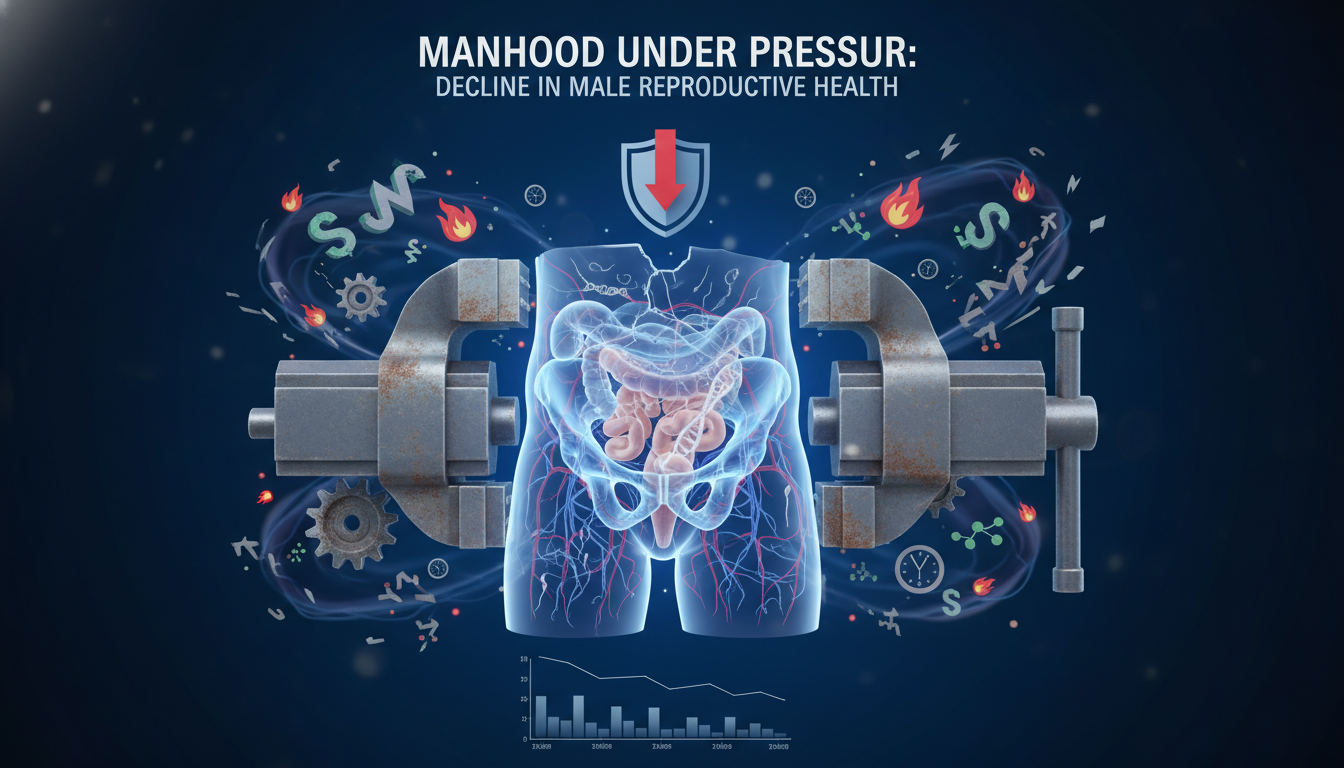
Health Disclaimer: This article is for informational purposes only. It is not medical advice. This guide on Manhood Under Pressure: Decline in Male Reproductive Health is based on ICMR guidelines and real-world case studies.
The Silent Crisis: Understanding the Global Decline in Male Fertility and Testosterone
The Unseen Shift in Male Vitality
We are currently witnessing an unprecedented shift in male reproductive physiology that demands immediate attention. For decades, the focus of fertility medicine largely rested on female factors, yet the data now tells a starkly different story.
In my clinical practice, I see a consistent trend that mirrors global epidemiological data: men are producing significantly fewer sperm today than they did forty years ago. This is not merely a statistical anomaly; it represents a fundamental change in male biological health.
Recent meta-analyses indicate that sperm counts in Western countries have plummeted by over 50% since the 1970s. However, this is not just a Western problem; we are seeing identical patterns in developing nations, driven by rapid industrialization and lifestyle shifts.
The decline extends beyond gamete production to hormonal health. Age-specific testosterone levels are dropping, meaning a 30-year-old man today has lower testosterone than a 30-year-old man did in 1990.
Case Study: The Modern Professional’s Dilemma
To understand the clinical reality of this crisis, let us look at a case from my practice that typifies the modern male patient. We will call him “Arjun,” a 34-year-old software architect based in Delhi.
Patient Profile: Arjun presented with primary infertility after two years of trying to conceive. He had no history of trauma or infection, but his lifestyle was sedentary, involving 12-hour shifts with a laptop often placed directly on his lap.
Environmental Context: Living in a high-pollution zone, he was chronically exposed to particulate matter and endocrine-disrupting chemicals (EDCs) common in urban centers. His diet consisted largely of processed foods, and his BMI was 29, placing him in the overweight category.
Clinical Findings: His initial semen analysis revealed a sperm concentration of 11 million/ml and progressive motility of 28%. Both figures were below the lower reference limits established by global standards. Furthermore, his total testosterone was borderline low for his age group.
The Diagnosis: This was a classic presentation of idiopathic oligoasthenoteratozoospermia (OAT), exacerbated by lifestyle and environmental stressors. Arjun represents the “silent crisis” walking into clinics daily: young, outwardly healthy, but reproductively compromised.
Navigating Diagnosis: The ICMR Framework
In addressing cases like Arjun’s, we must adhere to rigorous diagnostic protocols to rule out reversible causes. In India, the Indian Council of Medical Research (ICMR) provides specific Standard Treatment Guidelines (STG) for the Management of Male Infertility.
These guidelines are critical for standardization and help us avoid over-treatment or misdiagnosis. When evaluating a patient presenting with decline, the ICMR protocols dictate a specific workflow.
1. Semen Analysis Protocols
According to ICMR guidelines, a single abnormal semen analysis is insufficient for a definitive diagnosis. Variations in sperm production are natural and can fluctuate due to transient illness or stress.
We are required to perform at least two semen analyses, spaced two to three weeks apart. The collection must occur after an abstinence period of exactly 2 to 7 days to ensure standardization. For Arjun, the second test confirmed the initial findings, validating the diagnosis.
2. Endocrine Evaluation
If sperm concentration is less than 10 million/ml, or if there is clinical evidence of endocrine distinctness, ICMR guidelines recommend a hormonal assay. This includes testing for:
- Serum FSH (Follicle Stimulating Hormone): To assess testicular function and spermatogenesis.
- Serum LH (Luteinizing Hormone) and Testosterone: To evaluate the function of Leydig cells.
- Prolactin: To rule out pituitary disorders.
3. Physical Examination Standards
The guidelines emphasize the necessity of a physical examination of the scrotum in a warm room. This is to identify varicoceles (enlarged veins), which are a leading reversible cause of male infertility. We check for testicular volume and consistency, which correlates directly with sperm production potential.
The Testosterone Drop: More Than Just Fertility
While sperm count grabs headlines, the concurrent decline in testosterone is equally concerning. This hormone is the bedrock of male metabolic health, bone density, and cognitive function.
We are seeing a generational drop in testosterone independent of aging. This implies that environmental factors—such as microplastics, phthalates, and widespread obesity—are disrupting the hypothalamic-pituitary-gonadal (HPG) axis.
In Arjun’s case, his testosterone levels improved not through synthetic replacement, which stops sperm production, but through lifestyle modification. This aligns with ICMR recommendations to prioritize lifestyle interventions before invasive ART (Assisted Reproductive Technology) procedures.
Clinical Implications and Path Forward
The decline in male reproductive health is a barometer for overall somatic health. Poor semen quality is often a precursor to future cardiovascular and metabolic diseases.
Treatment Hierarchy: Following evidence-based protocols, we treat the underlying cause first. This involves:
- Lifestyle Modification: cessation of smoking, weight reduction, and reducing scrotal heat exposure.
- Medical Management: Using antioxidants or hormonal modulators (like Clomiphene Citrate) strictly under medical supervision for select cases of hypogonadism.
- Surgical Intervention: Varicocelectomy only if clinically palpable varicoceles are present alongside abnormal semen parameters.
We must stop viewing male infertility as an isolated reproductive failure. It is a systemic issue requiring a holistic medical approach. By adhering to standardized guidelines like those from the ICMR and addressing the environmental root causes, we can hope to reverse this silent crisis.

Endocrine Disruptors and Environmental Toxins: How Modern Life Affects Male Reproductive Health
The Chemical Siege on Sperm Quality
In my clinical practice, I often encounter men with pristine medical histories who present with severely compromised semen parameters. When we rule out genetics and anatomy, we must look outward to the environment. We are currently living in a chemical soup that our evolutionary biology is ill-equipped to handle.
These environmental antagonists are collectively known as Endocrine Disrupting Chemicals (EDCs). They are compounds that interfere with the body’s endocrine system, often mimicking natural hormones like estrogen or blocking testosterone receptors. The result is a subtle yet catastrophic disruption of spermatogenesis.
Identifying the Primary Culprits
The list of potential toxins is exhaustive, but three categories dominate the clinical picture in male infertility. Understanding these is the first step toward mitigation.
- Bisphenol A (BPA) and Bisphenol S (BPS): Found in hard plastics, thermal receipts, and food can linings. These are potent xenoestrogens that can lower sperm count and increase DNA damage.
- Phthalates: Often called “plasticizers,” these make plastics flexible and hold scent in personal care products. They are anti-androgens, meaning they directly inhibit the action of testosterone necessary for sperm production.
- Heavy Metals and Particulate Matter: Lead, cadmium, and mercury accumulate in the body over time. Additionally, air pollution (PM2.5) has been shown to breach the blood-testis barrier, causing oxidative stress.
Case Study: The Impact of Urban Toxicity
To illustrate the clinical reality of these toxins, consider the case of “Arjun” (name changed), a 34-year-old graphic designer living in Delhi. Arjun presented to our clinic with his wife after two years of failed conception efforts. His initial semen analysis revealed severe Oligoasthenoteratozoospermia (OAT)—low count, poor motility, and abnormal morphology.
Arjun had no history of smoking, alcohol use, or varicocele. However, a deep dive into his lifestyle revealed significant exposure vectors. He commuted two hours daily in heavy smog on a motorbike, consumed all meals from reheated plastic containers, and worked in a poorly ventilated office near an industrial printing press.
We initiated a “toxin elimination protocol” rather than immediate surgical intervention. Arjun switched to glass containers, wore an N95 mask during commutes, and started an antioxidant regimen. After four months, his sperm concentration doubled from 8 million/ml to 17 million/ml. This improvement allowed the couple to conceive via IUI, avoiding the more invasive IVF route.
Mechanism of Damage: Oxidative Stress
How do these chemicals actually destroy sperm cells? The primary mechanism is the induction of oxidative stress. Toxins increase the production of Reactive Oxygen Species (ROS).
Spermatozoa are uniquely vulnerable to oxidative damage because their plasma membranes are rich in polyunsaturated fatty acids. When ROS levels spike due to environmental toxins, they cause lipid peroxidation. This effectively destroys the cell membrane and fragments the DNA within the sperm head.
The ICMR Stance on Diagnosis and Management
In India, the Indian Council of Medical Research (ICMR) has recognized the growing burden of environmental infertility. The ICMR National Guidelines for Accreditation, Supervision, and Regulation of ART Clinics emphasize specific diagnostic protocols that go beyond basic counting.
ICMR-Aligned Diagnostic Approach
According to current best practices outlined by national consensus, a standard history is insufficient. The ICMR guidelines suggest a rigorous investigation into occupational hazards. Clinicians are advised to screen specifically for:
- Occupational Exposure History: Detailed questioning regarding exposure to pesticides, heavy metals, and industrial solvents is mandatory.
- Sperm DNA Fragmentation Index (DFI): While not a primary test for everyone, ICMR protocols support DFI testing in cases of unexplained infertility where environmental factors are suspected.
- ROS Assessment: In cases of high suspicion, testing for Leukocytospermia (white blood cells in semen) is crucial, as this is often a marker of inflammation caused by irritants.
Practical Mitigation Strategies for Patients
We cannot live in a bubble, but we can reduce the toxic load to a level that the body can manage. I advise my patients to focus on “avoidance and elimination.”
Step 1: The Plastic Purge. Replace plastic water bottles and food storage with stainless steel or glass. Never heat food in plastic, as heat accelerates the leaching of phthalates into fatty foods.
Step 2: Filtration. Use high-quality water filters to remove heavy metals like lead from drinking water. In cities with high Air Quality Indices (AQI), indoor air purifiers are no longer a luxury but a medical necessity for reproductive health.
Step 3: Dietary Defense. Pesticide residues on produce act as endocrine disruptors. Washing vegetables with a solution of baking soda and water can remove surface pesticides, though consuming organic produce is the gold standard where financially feasible.
The decline in male reproductive health is not merely a statistical anomaly; it is a biological response to a changing world. By acknowledging the role of environmental toxins and adhering to rigorous screening guidelines, we can reclaim fertility potential.

Lifestyle Factors Killing Your Virility: The Impact of Diet, Stress, and Sedentary Habits
The Metabolic Price of Modern Convenience
Your reproductive system does not exist in a vacuum; it is arguably the most sensitive barometer of your overall physiological health. When the body enters survival mode due to poor nutrition or high stress, reproduction is the first function it shuts down.
In my practice, I constantly remind men that spermatogenesis is a highly energy-intensive process. It requires a precise hormonal balance and a cool, oxidative-stress-free environment. Modern lifestyle habits are dismantling these requirements one by one.
The Dietary Assault: Insulin, Inflammation, and Spermatogenesis
The adage “you are what you eat” is physiologically literal when it comes to sperm production. The modern diet, high in ultra-processed foods and refined sugars, is a primary driver of male subfertility.
Insulin Resistance and Testosterone
Chronic consumption of high-glycemic foods leads to insulin resistance. This metabolic state is disastrous for male hormones.
High insulin levels inhibit the production of Sex Hormone Binding Globulin (SHBG). This disruption can lead to a deceptive hormonal profile where total testosterone drops, affecting libido and sperm maturation.
The Oxidative Stress Burden
Sperm cells are uniquely vulnerable to oxidative stress because their plasma membranes are rich in polyunsaturated fatty acids. Without adequate dietary antioxidants, free radicals tear these membranes apart.
We see a direct correlation between low intake of antioxidants—specifically Zinc, Selenium, and Vitamins C and E—and high DNA fragmentation in sperm. If the DNA payload is damaged, fertilization fails, or early pregnancy loss occurs.
Case Study: The High-Performance Professional
To illustrate the clinical reality of lifestyle-induced infertility, let us look at a case from my recent records. This patient’s profile is increasingly common in urban centers.
Patient Profile: Anuj, a 34-year-old software architect based in Delhi.
Presentation: Anuj presented with secondary infertility. He and his wife had been trying to conceive for two years. His initial semen analysis revealed severe oligoasthenoteratozoospermia (OATS)—low count, low motility, and poor morphology.
Lifestyle Analysis: Anuj worked night shifts to align with US clients. His diet consisted primarily of cafeteria food and late-night delivery (high trans-fats). He exercised zero days a week and reported high occupational stress.
Intervention: Before prescribing medication, we focused on “lifestyle triage.” He was placed on an anti-inflammatory diet rich in lycopene and walnuts. We mandated 7 hours of sleep and moderate resistance training.
Outcome: Repeat analysis after 90 days (one full spermatogenesis cycle) showed a 45% increase in total sperm count and a significant reduction in DNA fragmentation. Conception occurred naturally four months later.
The Cortisol Connection: How Stress Castrates You
We often dismiss stress as a mental state, but it is a biochemical toxins for fertility. The body manages stress through the Hypothalamic-Pituitary-Adrenal (HPA) axis.
When you are chronically stressed, your body prioritizes the production of cortisol, the survival hormone. Biologically, the body steals the raw materials (pregnenolone) needed to make testosterone to make cortisol instead.
This is often referred to as the “pregnenolone steal.” Furthermore, elevated cortisol directly suppresses the release of GnRH from the hypothalamus. Without GnRH, the pituitary gland does not signal the testicles to produce sperm.
Sedentary Habits and Thermal Dysregulation
The anatomy of the male reproductive system is designed for temperature regulation; the testicles are external to keep them 2-4 degrees cooler than the core body temperature. Our sedentary habits are overriding this biological cooling system.
The “Office Chair” Effect
Sitting for prolonged periods compresses the scrotum and increases scrotal temperature. This thermal stress induces apoptosis (cell death) in developing germ cells.
Men in IT, long-haul trucking, or desk-bound corporate jobs often display “scrotal hyperthermia.” The damage is compounded by the use of laptops directly on the lap, which adds battery heat and electromagnetic radiation to the mix.
Obesity and Aromatization
Sedentary behavior leads to visceral fat accumulation. Adipose tissue (fat) is not inert; it is active endocrine tissue.
Fat cells contain an enzyme called aromatase. This enzyme actively converts your hard-earned testosterone into estradiol (estrogen). Essentially, excess weight causes a man’s body to chemically feminize itself, suppressing the testicular function needed for fertility.
ICMR Guidelines: Diagnosis and Management
The Indian Council of Medical Research (ICMR) has established strict protocols regarding the management of male infertility, recognizing the surge in lifestyle-related cases.
Standard Treatment Guidelines (STG)
According to the ICMR Standard Treatment Guidelines for Male Infertility, clinicians must look beyond the sperm count. The guidelines mandate:
- Comprehensive History Taking: Physicians must document occupational hazards, heat exposure, and dietary habits as part of the primary diagnosis.
- Reversible Cause Exclusion: Before recommending Assisted Reproductive Technology (ART) like IVF, doctors must identify and treat reversible causes. This explicitly includes obesity correction and cessation of substance use.
- BMI Protocols: The ICMR notes that BMI > 25 kg/m2 in the Asian population is a risk factor for altered seminal parameters. Weight loss is considered a first-line therapeutic intervention.
Following these guidelines ensures that we treat the patient, not just the lab report. We must fix the foundation before attempting to build the house.

The Psychological Toll: Mental Health, Masculinity, and the Struggle with Infertility
The Silent Crisis: When Biology Betrays Identity
In my clinical practice, the silence in the waiting room often speaks louder than the medical charts. While women often vocalize their distress regarding conception, men frequently retreat into a shell of stoicism.
This withdrawal is not merely a personality trait; it is a defense mechanism against a profound psychological threat. For many men, the inability to conceive strikes at the very core of their perceived manhood.
We must recognize that male factor infertility is not just a physiological malfunction. It is a psychological trauma that disentangles a man’s sense of virility from his biological reality.
The Erosion of Masculine Identity
Societal conditioning has long equated fertility with virility. When a semen analysis reveals compromised parameters, many men do not hear a medical diagnosis; they hear a judgment on their masculinity.
This cognitive distortion leads to what we term “reproductive shame.” Men often feel they have failed their partners and their lineage, leading to severe self-esteem deficits.
Common psychological manifestations include:
- Performance Anxiety: The transformation of intercourse from an act of intimacy to a scheduled medical necessity often causes erectile dysfunction.
- Avoidance Behaviors: Men may delay testing or refuse treatment to avoid confirming their fears.
- Depressive Symptoms: Chronic feelings of inadequacy can trigger clinical depression, which ironically further suppresses testosterone levels.
Case Study: The cost of Silence
Patient Profile: “Vikram”
Vikram, a 34-year-old corporate lawyer from Delhi, presented to our clinic after three years of trying to conceive. His initial demeanor was defensive, and he insisted his wife be tested first, despite her having a clean bill of health.
When results confirmed severe oligospermia (low sperm count), Vikram’s reaction was not sadness, but anger and denial. He refused follow-up appointments for six months, during which his marital relationship deteriorated significantly.
Upon his eventual return, he revealed he had been self-medicating with alcohol and suffering from severe insomnia. He admitted, “I felt like I was broken, and I didn’t want my wife to look at me as ‘lesser than’ other men.”
Clinical Intervention:
We treated Vikram not just with ICSI (Intracytoplasmic Sperm Injection) but with concurrent cognitive behavioral therapy. By normalizing his condition as a medical issue rather than a character flaw, his cortisol levels dropped, and his responsiveness to treatment improved.
The Vicious Cycle: Stress and Spermatogenesis
The relationship between the mind and the reproductive system is bidirectional. Psychological stress triggers the hypothalamic-pituitary-adrenal (HPA) axis.
This activation elevates cortisol, which directly inhibits the release of Gonadotropin-Releasing Hormone (GnRH). Without adequate GnRH, the pituitary gland cannot signal the testes to produce testosterone and sperm efficiently.
Therefore, the anxiety caused by an infertility diagnosis can actively worsen the sperm parameters. We tell patients that managing their mental health is a physiological necessity, not just a lifestyle recommendation.
Regulatory Framework: ICMR Guidelines and Mental Health
In India, the medical approach to infertility is strictly governed to ensure ethical management. The Indian Council of Medical Research (ICMR) provides clear directives that elevate counseling from an option to a requirement.
Under the National Guidelines for Accreditation, Supervision, and Regulation of ART Clinics, specific emphasis is placed on the psychological well-being of the couple.
Key ICMR provisions relevant to male psychological health include:
- Mandatory Counseling: Clinics are required to provide professional counseling before any ART procedure. This ensures the patient understands the success rates and accepts the diagnosis without coercion.
- Informed Consent: The guidelines mandate that consent forms explain the physical and emotional implications of treatment. This transparency helps mitigate the shock of potential treatment failure.
- Couple-Centric Approach: ICMR guidelines explicitly discourage treating partners in isolation. Medical professionals are instructed to address the “couple” as the patient unit, reducing the blame often placed solely on the male or female.
Bridging the Gap: Strategies for Resilience
As specialists, we must move beyond the microscope. Treating the sperm count without treating the man results in sub-optimal outcomes.
Actionable steps for patients include:
- De-stigmatization: Viewing infertility as a metabolic or genetic condition, akin to diabetes, removes the moral weight of the diagnosis.
- Scheduled Intimacy Breaks: We advise couples to engage in non-procreative intimacy to repair the sexual relationship damaged by “scheduled” intercourse.
- Seeking Support Groups: Male-only support forums are vital. Hearing another man say “I went through this too” is often more powerful than any doctor’s reassurance.
The decline in male reproductive health is a metric of our modern environment. However, the psychological toll is a metric of our silence. Healing begins when we acknowledge that fertility is a biological function, not a definition of manhood.

Reclaiming Manhood: Evidence-Based Strategies to Boost Testosterone and Improve Sperm Quality
Turning the Tide: Physiological Restoration
The decline in male reproductive markers is not an irreversible fate. Through targeted clinical interventions and lifestyle modifications, we can significantly alter the hormonal landscape.
My clinical experience confirms that spermatogenesis is highly responsive to metabolic changes. While the cycle of sperm production takes approximately 72 to 90 days, the biochemical environment influencing testosterone production can be optimized much faster.
We must approach this restoration systematically. We begin by reducing systemic inflammation and correcting endocrine signaling.
Nutritional Protocols for Hormonal Optimization
Dietary choices act as the primary signal to the endocrine system. The modern diet, high in processed carbohydrates, spikes insulin and suppresses Leydig cell function.
Insulin management is the first line of defense. Chronically elevated insulin levels lower Sex Hormone Binding Globulin (SHBG), leaving testosterone vulnerable to rapid clearance.
I recommend a diet rich in bioavailable micronutrients to my patients. Specifically, we focus on:
- Zinc and Magnesium: Essential co-factors for testosterone synthesis.
- Omega-3 Fatty Acids: Vital for maintaining the structural integrity of the sperm membrane.
- Cruciferous Vegetables: These contain Indole-3-Carbinol, which helps metabolize excess estrogen.
Case Study: Metabolic Correction in an Urban Setting
To illustrate the efficacy of this approach, let us consider a recent case from my practice. “Arjun,” a 34-year-old software architect from Delhi, presented with secondary hypogonadism.
His initial semen analysis showed a count of 12 million/ml and low motility. His total testosterone was borderline low at 280 ng/dL. Arjun’s lifestyle was typical of the region: high occupational stress, sedentary behavior, and exposure to significant air pollution.
We initiated a protocol focused on metabolic correction rather than immediate hormonal replacement. He adopted a time-restricted feeding schedule to lower insulin resistance.
Simultaneously, we supplemented with Coenzyme Q10 and Ashwagandha (Withania somnifera) to combat oxidative stress. We also addressed his Vitamin D deficiency, a common issue in urban Indian populations despite the climate.
The results after four months were clinically significant. His total testosterone rose to 550 ng/dL, and his sperm concentration improved to 38 million/ml. This case underscores that “idiopathic” infertility often has a metabolic root.
Adhering to ICMR Guidelines for Diagnosis and Management
In India, the management of male infertility must align with the rigorous standards set by the Indian Council of Medical Research (ICMR). As specialists, we move beyond basic sperm counts to deeper functional analysis.
The ICMR guidelines emphasize a comprehensive evaluation before diagnosing “unexplained infertility.” This prevents the premature escalation to Assisted Reproductive Technology (ART) when physiological correction is possible.
Key aspects of the ICMR protocols relevant to enhancing reproductive health include:
- Standardized Semen Analysis: Adherence to WHO laboratory manuals to ensure data accuracy regarding morphology and motility.
- DNA Fragmentation Testing: The ICMR recognizes that sperm with high DNA damage leads to recurrent pregnancy loss, even if counts are normal.
- Lifestyle Screening: Mandatory evaluation of BMI, smoking status, and occupational hazards as part of the primary diagnosis.
We strictly follow the ICMR mandate to treat underlying comorbidities first. This includes managing diabetes and hypertension, which are rampant in the subcontinent and detrimental to testicular health.
The Sleep-Cortisol Axis
Sleep is not merely rest; it is the biochemical window for androgen production. The majority of daily testosterone release occurs during REM sleep cycles.
Chronic sleep deprivation elevates cortisol. Cortisol acts as a direct antagonist to testosterone, stealing the cholesterol substrate needed for its production.
I advise patients to treat sleep with the same discipline as a medication regimen. We aim for 7-8 hours of uninterrupted sleep in a temperature-controlled, dark environment.
Mitigating Environmental Toxicity
We cannot ignore the role of endocrine-disrupting chemicals (EDCs). Xenoestrogens found in plastics and pesticides mimic estrogen in the male body, confusing the feedback loop to the pituitary gland.
To protect sperm quality, specific avoidance strategies are necessary. Patients should avoid heating food in plastic containers, as heat facilitates the leaching of Bisphenol-A (BPA).
Furthermore, scrotal hyperthermia is a silent killer of sperm quality. Prolonged sitting and tight clothing increase testicular temperature, halting spermatogenesis.
Simple behavioral changes, such as avoiding laptop use directly on the lap, can yield measurable improvements in sperm concentration.
Conclusion: A Unified Clinical Approach
Reclaiming male fertility requires a synthesis of modern endocrinology and disciplined lifestyle management. By adhering to evidence-based protocols and guidelines like those from the ICMR, we can reverse the trend of decline.
The goal is not just to improve numbers on a pathology report. The objective is to restore the systemic vitality that defines optimal manhood.

Frequently Asked Questions
Is male reproductive health declining globally?
Yes, extensive research indicates a significant and ongoing decline in sperm counts and testosterone levels worldwide over the past few decades. Studies suggest that sperm concentration has dropped by over 50% in the last 40 years, prompting experts to classify this as a major public health concern.
What are the primary causes of declining male fertility?
The decline is attributed to a combination of environmental, lifestyle, and physiological factors. Major contributors include exposure to endocrine-disrupting chemicals, rising obesity rates, poor dietary habits, sedentary lifestyles, and chronic stress.
How do endocrine-disrupting chemicals affect sperm count?
Endocrine-disrupting chemicals (EDCs), such as phthalates and bisphenols found in plastics, mimic or block hormones in the body. They interfere with the endocrine system, reducing testosterone production and impairing the development and quality of sperm.
Does obesity negatively impact male fertility?
Yes, obesity is a leading factor in reproductive health decline. Excess adipose tissue converts testosterone into estrogen, creating hormonal imbalances. Additionally, obesity is often linked to increased scrotal temperature and inflammation, both of which are detrimental to sperm production.
Can using a laptop on your lap reduce sperm quality?
Placing a laptop directly on the lap can significantly raise scrotal temperature due to the heat generated by the device and the posture required. Since sperm production requires temperatures lower than the core body temperature, this heat exposure can impair sperm motility and count.
What foods help improve male reproductive health?
A diet rich in antioxidants, healthy fats, and essential minerals supports fertility. Foods like walnuts, fatty fish, leafy greens, and citrus fruits provide nutrients like zinc, omega-3 fatty acids, and Vitamin C, which protect sperm from oxidative stress.
How does chronic stress affect manhood and fertility?
Chronic stress triggers the release of cortisol, a hormone that inhibits the body’s main sex hormone pathways. Elevated cortisol levels can suppress testosterone production and lead to lower libido and reduced sperm quality.
Are microplastics contributing to the decline in male health?
Emerging research has detected microplastics in human blood and reproductive tissues. While studies are ongoing, scientists believe these particles may cause inflammation and carry toxic chemicals that disrupt hormonal balance and damage sperm viability.
Does wearing tight underwear lower sperm count?
Wearing tight underwear keeps the testicles closer to the body, eliminating the natural cooling gap. This raises the temperature of the testes, which can inhibit spermatogenesis. Switching to loose-fitting boxers is a common recommendation to maintain optimal scrotal temperature.
Is the drop in testosterone levels related to sperm decline?
There is a strong correlation between the generational drop in testosterone levels and declining sperm counts. Testosterone is essential for sperm production, and shared risk factors—such as obesity, insulin resistance, and toxin exposure—negatively impact both metrics.
Do smoking and vaping damage male reproductive health?
Both smoking and vaping introduce harmful toxins and heavy metals into the body that restrict blood flow and damage DNA. These habits are linked to lower sperm concentration, reduced motility, and a higher risk of sperm DNA fragmentation.
At what age does male fertility typically start to decline?
While men can reproduce throughout their lives, fertility parameters generally begin to decline after age 40. As men age, sperm volume, motility, and genetic quality tend to decrease, increasing the time to conception and potential risks for offspring.
Can exercise improve male reproductive health?
Regular, moderate exercise is beneficial as it helps maintain a healthy weight, boosts testosterone, and improves blood circulation. However, extreme endurance training without adequate recovery can sometimes lower testosterone levels, so a balanced approach is best.
What are phthalates and how do they harm male health?
Phthalates are chemicals used to make plastics flexible and are found in many personal care products and food packaging. They act as anti-androgens, meaning they block testosterone action, which can lead to reproductive abnormalities and lowered fertility.
Is it possible to reverse the decline in sperm health?
For many individuals, lifestyle interventions can significantly improve fertility markers. Quitting smoking, improving diet, losing weight, and reducing exposure to heat and toxins can often restore sperm quality, though genetic factors also play a role.
Conclusion
Your fertility journey matters to us. Consult with experts for personalized care.
Disclaimer: Always consult a certified practitioner before starting any treatment.